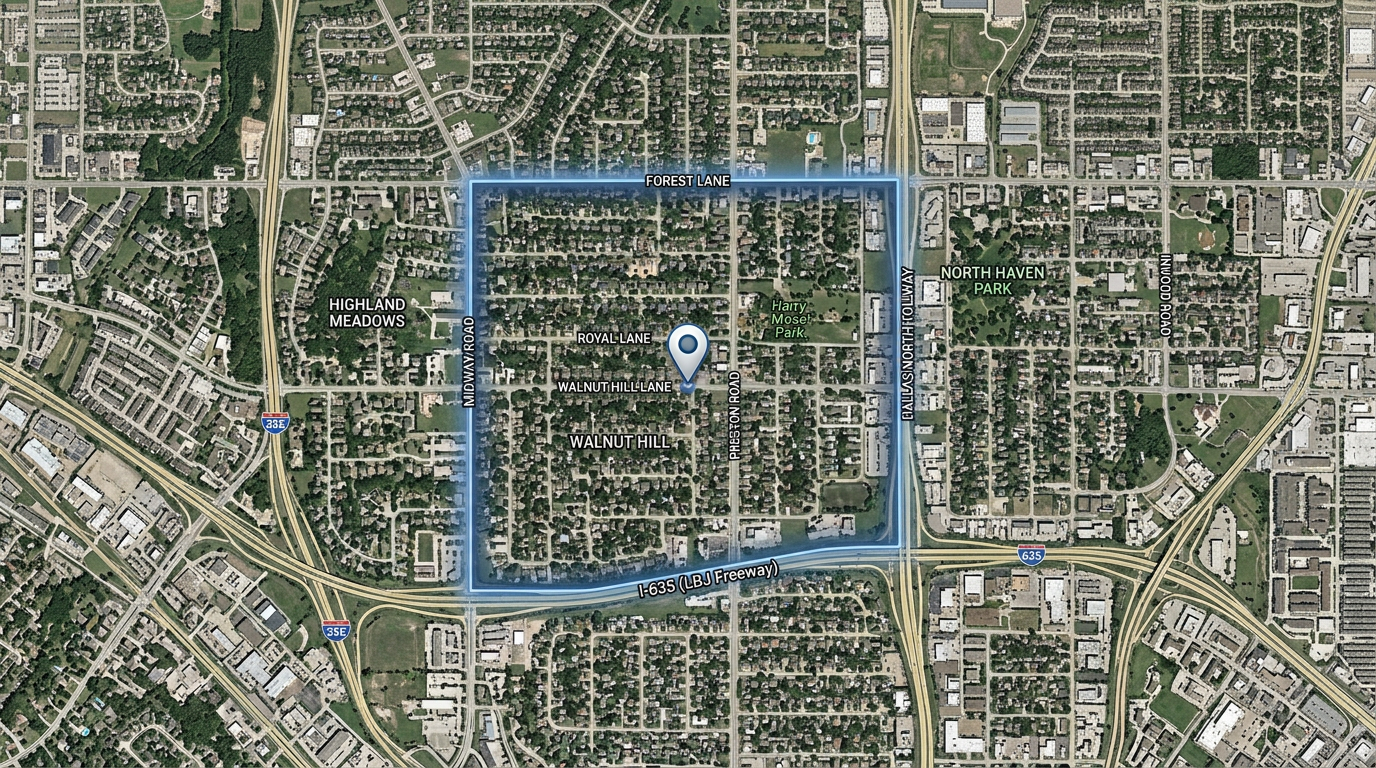
Midway Hollow today is known for tree-lined streets, custom homes, neighborhood parks, local restaurants, and a location that places residents in the center of Dallas. But long before new construction and coffee shops, the area was open prairie and farmland. Understanding the history of Midway Hollow gives a deeper appreciation for why the neighborhood feels different from many parts of Dallas today.
The Early Days: Prairie, Farms & Original Settlers (1840s–1940s)
The land that would eventually become Midway Hollow traces back to the 1840s through the Peters Colony land grants, which encouraged settlement across North Texas. Early families and settlers established farms and ranches throughout the area, and many of those names remain woven into the neighborhood today — Lively Lane, Marsh Lane, and Coppedge Lane among them.
For nearly a century, this area looked nothing like modern Dallas. It was open prairie land, family farms, ranching operations, and dirt roads with scattered homesteads — and at the time, downtown Dallas felt worlds away.
Midway Hollow fun factSome of today's oversized lots and irregular street patterns are remnants of those original land divisions.
Midway Hollow is Born: The Post-War Boom (1945–1955)
Following World War II, Dallas experienced explosive growth as veterans returned home and industries expanded. Developer and oilman Clint Murchison Sr. helped spark development by building early housing in Northwest Dallas, while Dallas real estate pioneer Ebby Halliday helped introduce the concept of model homes — changing the way homes were marketed and sold.
The original homes of Midway Hollow were designed for practicality: two- and three-bedroom ranch-style layouts, hardwood floors, brick exteriors, and large yards for growing families. Many early residents were airline employees from nearby Love Field, young families, returning veterans, and Dallas professionals. By the mid-1950s, Midway Hollow had become one of Dallas's emerging suburban communities.
Midway Hollow Today: 2000s–Present
Over the past two decades, Midway Hollow has undergone one of the most dramatic transformations in Dallas. As home prices increased in neighboring Preston Hollow, buyers and builders began looking west — and found larger lots, central Dallas access, established neighborhoods, and flexible redevelopment opportunities.
Today the neighborhood includes a unique mix of original post-war ranch homes, renovated mid-century properties, luxury custom construction, and contemporary infill. It creates one of Midway Hollow's defining characteristics: you can walk down a single street and see Dallas history spanning seventy years.
Why Buyers Continue to Love Midway Hollow
Midway Hollow remains attractive because it blends a central location, larger lots, mature trees, and genuine neighborhood character with access to public and private schools, shopping, and parks — a mix of old Dallas charm and modern construction. It isn't simply a neighborhood; it's a collection of decades of Dallas history layered into one community.
